 Business License

Plasma Slotted Liner for Canadian Oil Sands Thermal Wells: Applicability for SAGD Operations
Plasma Slotted Liner for Canadian Oil Sands Thermal Wells: Applicability for SAGD Operations
Is plasma slotted liner suitable for Canadian oil sands SAGD wells? Explore how hard-quenched slot surfaces and keystone geometry address thermal cycling, erosion, and sand control challenges. Learn more.
The Canadian Oil Sands Challenge: Why Sand Control Defines Well Economics
Canada‘s oil sands represent one of the world’s most demanding environments for downhole completion equipment. The majority of Alberta‘s oil sands—approximately 80%—are too deep for surface mining, making Steam Assisted Gravity Drainage (SAGD) the preferred recovery method for accessing this vast bitumen resource.
In SAGD operations, a horizontal well pair is drilled—an upper well for continuous steam injection and a lower producer for heated bitumen recovery. The injected steam, at temperatures reaching 220 to 275°C, mobilizes the highly viscous bitumen and drives it toward the production well. This thermal process, while effective, creates a uniquely hostile downhole environment.
The central challenge is sand. The Athabasca and McMurray oil sands formations are unconsolidated—loose sand grains are held together by bitumen rather than natural cementation. Without effective sand control, the erosive power of produced sand rapidly destroys downhole equipment and surface facilities. Slotted liners have consequently become the most widely deployed sand control solution in Alberta‘s SAGD wells, valued for their sand retention performance in these unconsolidated formations and their tolerance of installation and thermal loads.
However, conventional slotted liners face a persistent performance gap. While they reduce sand production, they do not eliminate it entirely. More critically, the slot edges in mechanically cut liners are vulnerable to progressive erosion. As sand-laden fluids pass through the slots over months and years of production, the slot width gradually enlarges—and once the aperture exceeds the designed sand retention threshold, the liner loses its core function.
How SAGD Operating Conditions Attack Conventional Slotted Liners
Understanding why plasma slotted liner technology matters for Canadian oil sands requires examining the specific failure mechanisms that SAGD operations impose on conventional sand control screens.
Thermal Cycling and Mechanical Fatigue
SAGD wells experience enormous temperature swings. Liners heated from initial reservoir temperatures as low as 10°C to peak temperatures of 220–275°C undergo a temperature increase exceeding 270°C. When this thermal expansion is confined, significant tensile and compressive stresses develop within the liner. Over repeated steam injection and production cycles, these stresses can push the liner into large-scale yield, where deformation failure mechanisms become active.
Low-cycle fatigue emerges as a critical failure mode under these conditions, particularly in cyclic steam stimulation (CSS) wells, where repeated heating and cooling cycles progressively accumulate plastic deformation. A liner that cannot withstand this thermal-mechanical loading will fail regardless of its sand retention properties.
Stress Build-Up and Sand Compaction Around the Liner
As the SAGD steam chamber grows, the bitumen melts and the bonding between sand grains is lost. The gap between the formation and the sand control liner gradually collapses, leading to effective stress build-up and progressive compaction of the oil sands around the liner.-11
Laboratory studies have demonstrated that liner performance is significantly affected by this normal stress buildup. Sand-pack compaction reduces porosity and permeability near the liner, while fines accumulation further complicates the near-wellbore environment through pore plugging. The slot design must therefore accommodate not just initial conditions, but the evolving stress state throughout the well‘s productive life.
Erosion and Slot Edge Degradation
The erosive nature of produced sand in SAGD operations is a recognized concern for mechanical integrity across oil sands facilities. At the liner itself, high-velocity, sand-laden flow impinges on slot edges continuously. In conventional straight-cut slots, this leads to progressive aperture enlargement—a failure mode that directly undermines the liner’s reason for installation.
Plugging and Fines Migration
Plugging of slotted liners in SAGD wells has been reported as a common operational problem, attributed to fouling and scaling by organic and inorganic migratory particles. Fine particles mobilized toward the liner can plug pore spaces near the wellbore, reducing productivity even when the liner itself remains structurally intact. The slot geometry must balance sand retention against the need to allow fines to pass through without accumulating.
Plasma Slotted Liner: Engineering the Slot for Thermal Well Survivability
The plasma slotted liner addresses these SAGD-specific challenges through two integrated design features: micro-keystone slot geometry and a hard quenched layer formed in-situ during plasma slotting.
The Micro-Keystone Slot: Geometry That Defends Itself
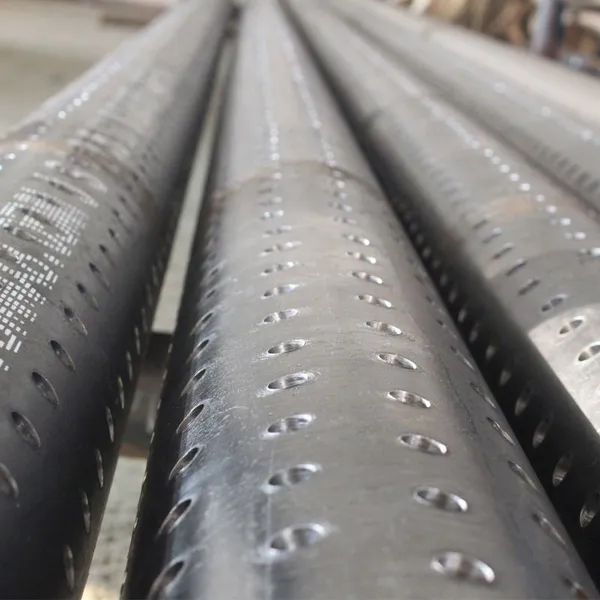
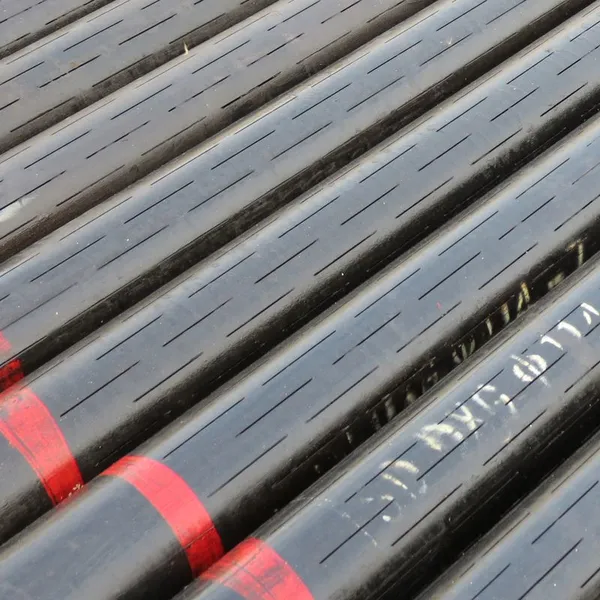
The plasma slotted liner features a compound trapezoidal slot cavity—narrower on the exterior surface and wider toward the interior. The outer trapezoidal section has a small angle and a thickness of 2–3 mm, while the inner section has a larger angle that reduces flow resistance for produced crude.
For SAGD applications, this geometry delivers three practical benefits:
Self-cleaning functionality. The narrow exterior opening blocks larger sand grains while the widening interior allows fine particles to pass through without lodging. This reduces the plugging tendency that plagues straight-cut slots in formations with migratory fines.
Natural sand bridging. Blocked sand particles accumulate at the exterior surface and form a permeable sand bridge—functioning as an in-situ gravel pack that enhances filtration without the need for surface-delivered proppant.
Erosion tolerance. The small-angle outer slot profile reduces the wear rate at the slot mouth, because the geometry presents a less aggressive target to impinging particles. Even if some edge wear occurs, the tapered profile maintains effective sand retention far longer than a straight slot would.
Academic research on keystone-profile slots in SAGD applications confirms these advantages: the narrow inlet keeps finer sands from entering the wellbore, while the wider outlet lowers plugging potential inside the slot.
The Hard Quenched Layer: Metallurgical Defense at the Point of Attack
The second pillar of plasma slotted liner performance is the hard quenched layer on the slot surface. During plasma slotting in a water-based compound fluid, the high-frequency, high-temperature plasma beam simultaneously cuts the pipe and triggers a reaction with the metal surface. This generates a 0.1–0.2 mm hardening and antiseptic layer on the processed slot surface.
The implications for SAGD wells are direct:
Hardness more than three times that of the pipe body: The hardened layer effectively improves wear resistance and corrosion resistance at the slot. In an environment where sand-laden flow continuously attacks the slot edges, this hardened surface dramatically slows the aperture enlargement that leads to sand control failure.
No heat-affected zone: Unlike laser slotting, which can create micro-cracks and a degraded heat-affected zone, plasma slotting in a water-based compound fluid avoids heat stress, preserving the mechanical integrity of the base pipe. This matters in thermal wells where the liner must endure cyclic thermal loading without introducing additional fatigue initiation sites.
Enhanced inoxidizability: The quenched surface resists oxidation and chemical attack, providing dual protection against the corrosive elements present in produced fluids at elevated temperatures.
The combination of a wear-resistant slot surface and a mechanically intact pipe body positions the plasma slotted liner to address both the erosion-driven and stress-driven failure modes that threaten sand control longevity in SAGD wells.
Mechanical Integrity: Meeting the Structural Demands of Thermal Wells
Sand control performance is meaningless if the liner cannot survive installation and thermal operation. SAGD completions require screens that withstand aggressive installation loads and thermal cycling without structural compromise.
Plasma slotted liners preserve approximately 97% of the original pipe tensile strength after slotting—a marked advantage over competing technologies that typically sacrifice 20–30% of strength. Because the process introduces no heat-affected zone or micro-cracking, the liner retains the mechanical properties of the base casing or tubing. The result is a slotted liner that behaves more like a continuous pipe than an assembly of weakened segments—a critical distinction in horizontal SAGD wells where axial loads from confined thermal expansion can otherwise induce large-scale yield.
Fit Within the SAGD Sand Control Landscape
The plasma slotted liner does not claim universal superiority over every alternative. SAGD operators deploy a range of standalone screen technologies, and selection depends on formation characteristics, completion philosophy, and economic constraints.
What the plasma slotted liner offers is a distinctive performance profile:
For formations where erosion-driven slot enlargement is the dominant failure risk, the hard quenched layer provides a direct, metallurgical countermeasure that wire-wrapped screens—widely recognized as exhibiting high erosion susceptibility—do not inherently possess.
For wells where thermal cycling threatens mechanical integrity, the absence of a heat-affected zone and the high retained tensile strength reduce the risk of deformation-driven failure.
For operations concerned with plugging from migratory fines, the keystone geometry‘s self-cleaning behavior and natural sand bridging offer a geometry-based defense that straight-cut slots lack.
The technology is not a panacea for formations with extremely high reactive clay content or ultra-fine sands below the practical slot width threshold. It is, however, a highly targeted solution for the erosion-and-thermal-fatigue challenges that dominate many Canadian oil sands SAGD applications.
Application Parameters for Canadian Thermal Wells
Plasma slotted liners are available in outside diameters from 50 mm to 219 mm, with slot widths from 0.15 mm to 4.0 mm and length options up to 12,000 mm. For SAGD applications, slot width selection should be guided by the particle size distribution of the in-situ McMurray or equivalent formation sand—research from the University of Calgary indicates that the minimum slot width for most slotted liners in clastic heavy oil and bitumen formations is approximately 300 μm (0.012“), with keystone profiles providing anti-plugging benefits beyond what straight slots deliver.
The liner is compatible with open-hole screen completion, open-hole gravel pack, and slotted liner completion with external casing packers—all completion modes deployed in Canadian thermal projects.
A Targeted Answer to SAGD‘s Sand Control Demands
The applicability of plasma slotted liner technology to Canadian oil sands thermal wells rests on a simple premise: SAGD wells demand sand control that survives erosion, thermal cycling, and mechanical loading simultaneously, and the plasma slotted liner is engineered to address each of these failure pathways at the slot—the precise location where conventional liners begin to fail.
The hard quenched layer resists the abrasive wear that enlarges slots and destroys sand retention. The keystone geometry provides self-cleaning and bridging behavior suited to unconsolidated formations with migratory fines. The heat-affected-zone-free structure preserves mechanical strength through the temperature swings that define SAGD operations.
For operators in the Athabasca, Cold Lake, and Peace River regions evaluating sand control options for thermal wells, plasma slotted liner technology warrants serious consideration—not as a generic alternative, but as a slot-level engineering solution to the specific degradation mechanisms that limit conventional slotted liner life in Canada‘s oil sands.
Recently Posted
-
Plasma Slotted Liner's Hard Quenched Layer: The Key to Extending Sand Control Period
October 21, 2026Plasma Slotted Liner's Hard Quenched Layer: The Key to Extending Sand Control PeriodDiscover how the hard quenched layer on pl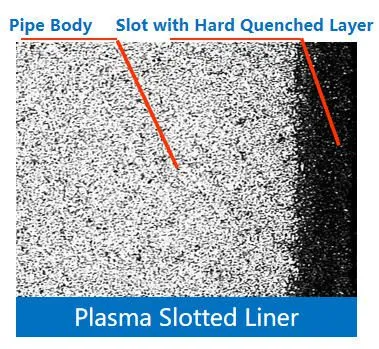 Read More
-
Plasma Slotted Liner: Erosion Resistance Performance — From Theory to Application Cases
June 8, 2026Plasma Slotted Liner: Erosion Resistance Performance - From Theory to Application Cases IntroductionIn the oil and gas i Read More
-
Slotted Liner Completion in Geothermal Wells: A Game-Changer for Sustainable Energy Production
May 29, 2026Slotted Liner Completion in Geothermal Wells: A Game-Changer for Sustainable Energy Production For decades, geothermal energy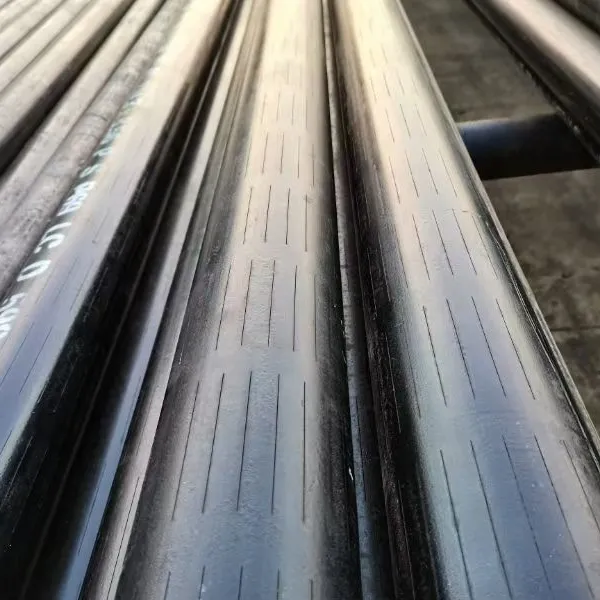 Read More
-
Sand Control Strategies in Colombia: Optimizing Production in Challenging Formations
December 15, 2025Sand production is a critical challenge in Colombia’s oil and gas sector, particularly in geologically complex regions like the Ll Read More

Contact Us
Recommended Products


-
 Casing Pup Joint PipeUS$ 1000 - 3000MOQ: 25 Tons
-
Oil Well Tubing Pup JointUS$ 30 - 100MOQ: 10 Pieces
-
API 5CT Seamless Oil Well Tubing – EUE/NUE, J55/L80/P110, C/W CouplingUS$ 30 - 100MOQ: 10 Pieces
-
Oil Casing and Tubing- API 5CT Full Grade Range, STC/LTC/BTC/EUE/NUEUS$ 20 - 100MOQ: 100 Meters
-
Thermal Recovery Well SAGD Horizontal Well Open Hole Slotted LinerUS$ 30 - 400MOQ: 100 Meters


-
Casing Pup JointUS$ 1000 - 3000MOQ: 25 Tons
-
Casing Pup Joint With CouplingUS$ 1000 - 3000MOQ: 25 Tons
-
Slotted Liner ScreenUS$ 30 - 300MOQ: 100 Meters
-
Tubing Pup Joint Manufacturers & SuppliersUS$ 30 - 100MOQ: 10 Pieces
-
Pup Joint API 5CT Seamless Oilwell Oil Tubing Pup JointUS$ 30 - 100MOQ: 10 Pieces