 Business License

Plasma Slotted Liner's Hard Quenched Layer: The Key to Extending Sand Control Period
Plasma Slotted Liner's Hard Quenched Layer: The Key to Extending Sand Control Period
Discover how the hard quenched layer on plasma slotted liner slot surfaces dramatically extends sand control period. Proven in 1,000+ wells.
Why Sand Control Period Matters
In oil and gas wells prone to sand production, the effective sand control period directly determines well productivity, intervention frequency, and overall project economics. Every premature screen failure means costly workovers, lost production, and potential damage to downhole equipment. Operators worldwide are constantly searching for sand control solutions that last longer — and the plasma slotted liner with a hard quenched layer on slot surfaces delivers exactly that.
This blog explains the science behind the hard quenched layer, how it extends sand control period, and why it has become the preferred choice for high-erosion wells.
The Problem: Slot Edge Wear and Sand Control Failure
Conventional slotted liners produced by mechanical saw-cutting have a critical weakness: the slot edges are vulnerable to erosion from high-velocity, sand-laden fluids. As particles repeatedly impact the slot edges, the slot width gradually increases. Once the slot exceeds the designed sand retention size, formation sand passes through, leading to sand production — the very outcome the liner was installed to prevent.
The result? A shortened sand control period, frequent workovers, and escalating operational costs. In high-erosion wells, this failure can occur within months.
The Solution: Plasma-Induced Hard Quenched Layer
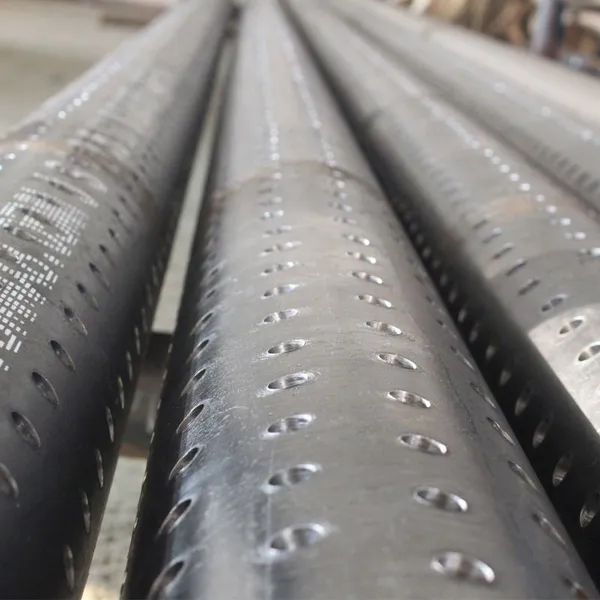
The plasma slotted liner solves this problem through a unique manufacturing process. During plasma slotting, a high-frequency, high-temperature plasma arc cuts through the base pipe while simultaneously reacting with a water-based compound working fluid. This in-situ reaction forms a hard quenched layer measuring 0.1–0.2 mm thick on the slot surface.
This hardened layer delivers three critical benefits for extending sand control period:
1. Superior Abrasion Resistance
The quenched layer has significantly higher hardness than the base pipe material. When sand particles impact the slot edge, the hardened surface resists cutting and gouging far more effectively than untreated steel. Laboratory tests confirm that the abrasion resistance of the slot is dramatically improved, meaning the slot width remains stable over a much longer production period.
2. Enhanced Corrosion Resistance
The quenched surface also exhibits improved inoxidizability, protecting the slot edges from chemical attack by produced fluids. Combined with abrasion resistance, this dual protection ensures the slot geometry stays true to design — a prerequisite for long-term sand retention.
3. No Heat-Affected Zone Degradation
Unlike conventional thermal cutting methods that create a weak heat-affected zone, the plasma slotting process preserves the mechanical properties of the surrounding pipe. Post-slotted liners retain approximately 97% of original tensile strength, while competing technologies typically lose 20–30%. This structural integrity supports the liner against collapse and deformation throughout its service life.
How the Hard Quenched Layer Extends Sand Control Period
The mechanism is straightforward: stable slot geometry equals sustained sand retention equals longer sand control period.
Failure Mode | Conventional Slotted Liner | Plasma Slotted Liner with Hard Quenched Layer |
Slot edge wear | Rapid; slot widens quickly | Slow; hardened surface resists wear |
Sand control period | Shortened by slot enlargement | Extended; slot width stays within design |
Workover frequency | High | Low |
Total cost of ownership | Higher | Lower |
The micro-keystone slot geometry (narrower outside, wider inside) adds a second layer of protection: even if minor edge wear occurs, the tapered profile maintains effective sand bridging and retention. Together, the hard quenched layer and keystone geometry create a liner that maintains its sand control function far longer than conventional alternatives.
Proven in the Field: Real-World Extension of Sand Control Period
The hard quenched layer's effectiveness is not just theoretical. In Chunfeng Oilfield's heavy oil thermal recovery wells — an environment of multiple high-temperature steam cycles and aggressive flow conditions — plasma slotted liners equipped with the hard quenched layer were installed in 90 wells with over 17,122 meters of liner. As of 2018, every well remained in normal production, with some wells achieving over seven years of effective sand control without failure. This performance was documented as "significantly superior to other types of sand control screens."
Globally, plasma slotted liners with this technology have been deployed in over 1,000 wells and 350,000+ feet of liner across China, Indonesia, Kazakhstan, India, and other regions — with zero reported downhole accidents such as liner breakage or uncontrolled sand production.
Economic Impact: Lower Cost, Longer Life
Extending sand control period translates directly into cost savings:
Reduced workover costs: Fewer interventions mean lower operating expenses.
Lower unit price: Plasma slotted liners cost approximately 70% of comparable alternatives.
Higher production uptime: Longer effective sand control means more days of uninterrupted production.
Lower total cost of ownership: The combination of lower upfront cost and extended service life delivers compelling whole-life economics.
Is a Plasma Slotted Liner Right for Your Well?
The plasma slotted liner with hard quenched layer is recommended for:
Open-hole horizontal wells in high-to-medium permeability reservoirs
Formations with median sand diameter greater than 0.12 mm
High-erosion wells where conventional screens fail prematurely
Heavy oil thermal recovery (SAGD, CSS) and complex geological conditions
Gravel packing applications in horizontal wells
For ultra-fine sand formations (median diameter<0.12 mm), consult with our engineers to determine the optimal configuration.
Extend Your Sand Control Period with Proven Technology
The hard quenched layer on plasma slotted liner slot surfaces is a game-changer for sand control longevity. By resisting abrasion, preventing slot enlargement, and maintaining structural integrity, this technology extends the effective sand control period far beyond conventional screens — as proven in hundreds of wells worldwide.
Ready to extend your sand control period? Contact the team from Dongying Mingde Petroleum Technology Co., Ltd today for a technical consultation and discover how plasma slotted liner technology can reduce workovers, lower costs, and maximize production uptime in your challenging wells.
Recently Posted
-
Plasma Slotted Liner for Canadian Oil Sands Thermal Wells: Applicability for SAGD Operations
October 21, 2026Plasma Slotted Liner for Canadian Oil Sands Thermal Wells: Applicability for SAGD OperationsIs plasma slotted liner suitable for C Read More
-
Plasma Slotted Liner: Erosion Resistance Performance — From Theory to Application Cases
June 8, 2026Plasma Slotted Liner: Erosion Resistance Performance - From Theory to Application Cases IntroductionIn the oil and gas i Read More
-
Slotted Liner Completion in Geothermal Wells: A Game-Changer for Sustainable Energy Production
May 29, 2026Slotted Liner Completion in Geothermal Wells: A Game-Changer for Sustainable Energy Production For decades, geothermal energy Read More
-
Sand Control Strategies in Colombia: Optimizing Production in Challenging Formations
December 15, 2025Sand production is a critical challenge in Colombia’s oil and gas sector, particularly in geologically complex regions like the Ll Read More

Contact Us
Recommended Products


-
 Casing Pup Joint PipeUS$ 1000 - 3000MOQ: 25 Tons
-
Oil Well Tubing Pup JointUS$ 30 - 100MOQ: 10 Pieces
-
API 5CT Seamless Oil Well Tubing – EUE/NUE, J55/L80/P110, C/W CouplingUS$ 30 - 100MOQ: 10 Pieces
-
Oil Casing and Tubing- API 5CT Full Grade Range, STC/LTC/BTC/EUE/NUEUS$ 20 - 100MOQ: 100 Meters
-
Thermal Recovery Well SAGD Horizontal Well Open Hole Slotted LinerUS$ 30 - 400MOQ: 100 Meters


-
Casing Pup JointUS$ 1000 - 3000MOQ: 25 Tons
-
Casing Pup Joint With CouplingUS$ 1000 - 3000MOQ: 25 Tons
-
Slotted Liner ScreenUS$ 30 - 300MOQ: 100 Meters
-
Tubing Pup Joint Manufacturers & SuppliersUS$ 30 - 100MOQ: 10 Pieces
-
Pup Joint API 5CT Seamless Oilwell Oil Tubing Pup JointUS$ 30 - 100MOQ: 10 Pieces